

By Kerri Rempp
Discover Northwest Nebraska
The thrill of discovering an ancient beaver fossil or locating freshwater fish fossils exactly where scientists expected to find them based on modeling developed studying in Paraguay was on display at Toadstool Geologic Park and Trailside Museum this month.
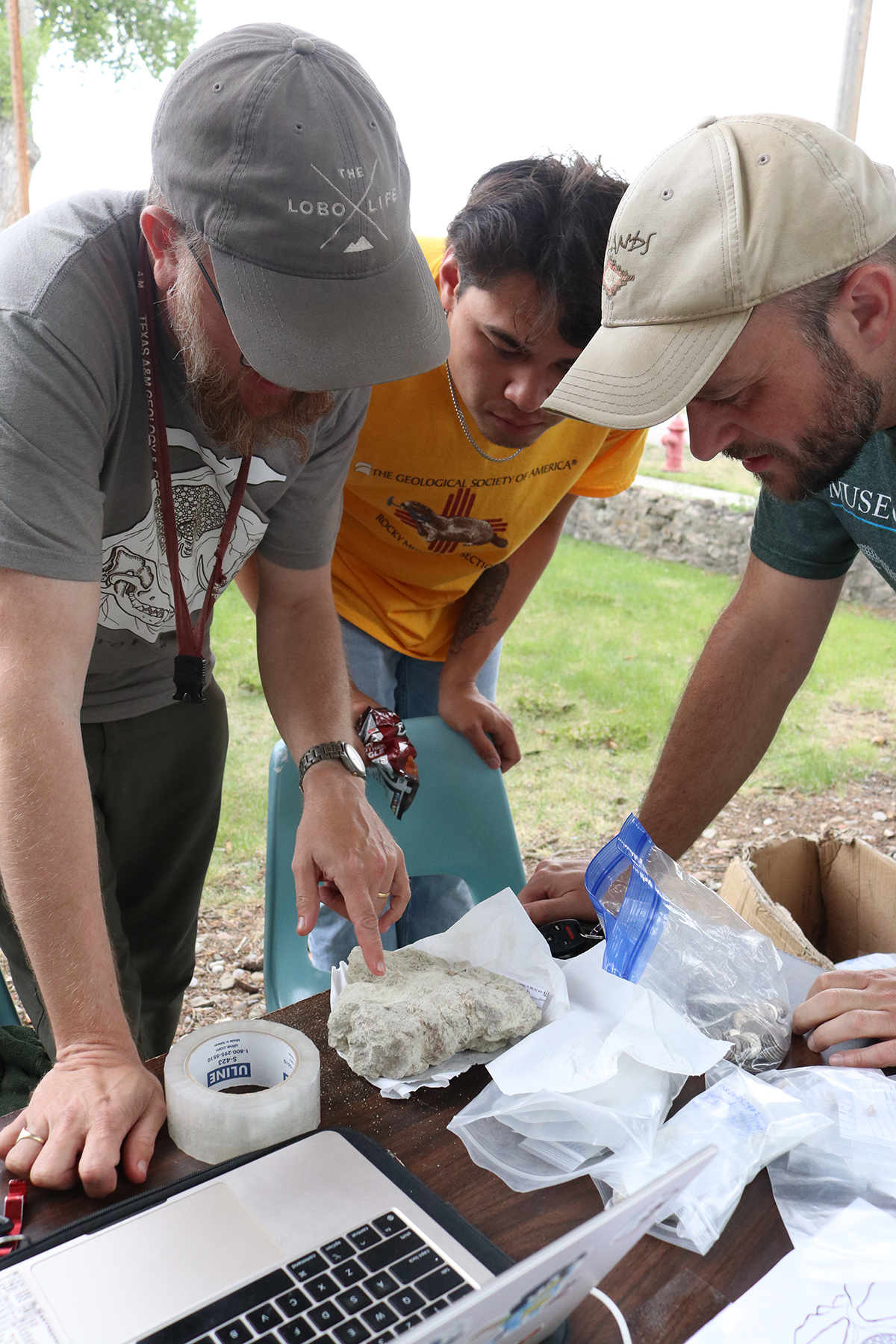
Researchers from four institutions set up for a two-week dig at Toadstool Geolgoic Park and shared part of their discovery and cataloguing processes with the public at Trailside Museum at Fort Robinson.
Jason Moore, from the University of New Mexico, explained that the multi-year, multi-institution project has taken researchers to the Petrified Forest National Park in Arizona, northwest Paraguay and northwest Nebraska to better understand why fossils are deposited where they are and the ecosystems that create them.
They’ve spent four years documenting the death of modern animals in Paraguay and studying the sedimentation process that eventually will turn the carcasses into fossils. Now, they are working to test the patterns they have seen in Paraguay against existing rock records in Arizona and Nebraska.
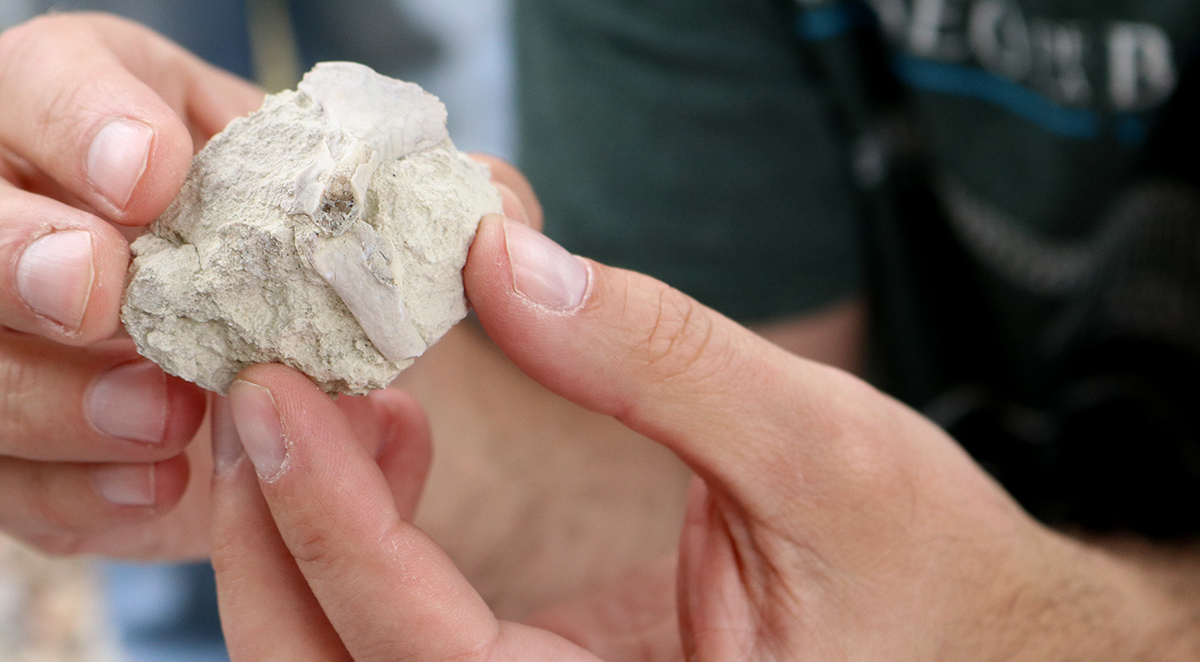
Moore has been working with the White River Group since 2003 and exploring Toadstool since 2011.
“We’ve built up a really nice collection of fossils from in and around Toadstool Park,” he said. The 2026 dig is focused on interpreting the fossils they locate with the knowledge they’ve gained and models created through the studyies in Paraguay.
In addition to the University of New Mexico, researchers from the University of Nebraska-Lincoln, the University of Wisconsin – Green Bay and the Grand Rapids Public Museum are taking part in the project. Students, both graduate and undergraduate, join the expeditions for hands-on experience and often develop projects of their own, Moore said.
“It’s important to get them involved,” he noted.
As an undergraduate 30 years ago, Moore recalled it being difficult for him to relate the process of deposition in sedimentary basins to the creation of fossils. The group’s work in Paraguay has allowed them to see the beginning stages of the process in real time, which has led to new models to predict what fossils may appear in various locations.
“What I’ve seen in Paraguay seems to be reappearing in the rocks here,” he said of this month’s visit to Toadstool Geologic Park.
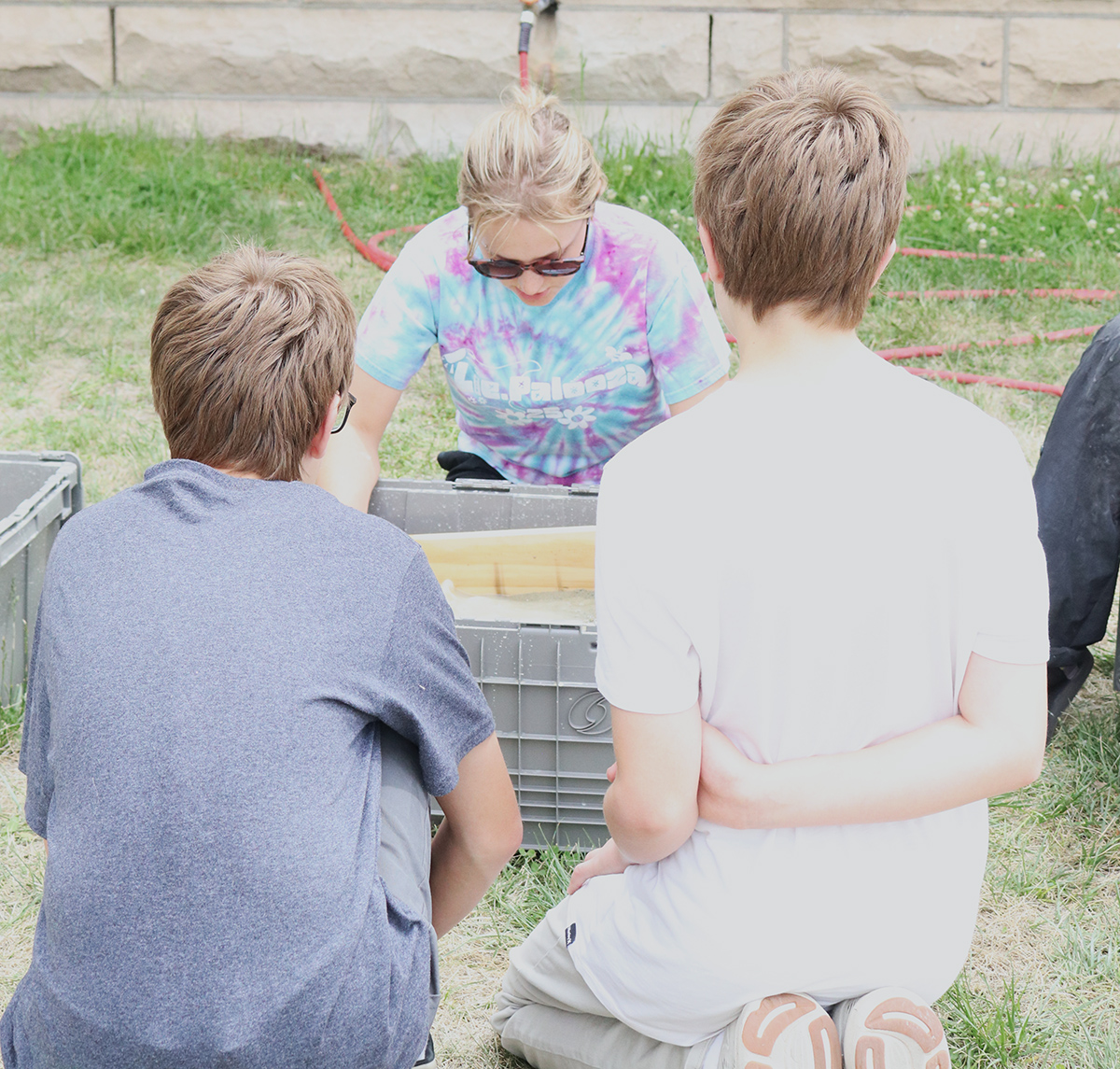
John Jacisin of the University of Wisconsin-Green Bay specializes in reptiles and amphibians. As they’ve searched for micro-fossils at Toadstool, he noted that his class of fossils is often hard to find and is understudied. In Europe, the fossil record indicates a major shift in the diversity of reptiles and amphibians, but there is not yet evidence of that taking place here. Jacisin’s hope is the discovery of more microfossils that will allow them to determine if reptile and amphibian diversity remained relatively stable across time or if it changed gradually or suddenly.
Ashley Poust, who works with the UNL State Museum, touted the collaboration as an important way to provide access to fossil knowledge, noting that the fossils found at Toadstool Geologic Park will remain in Nebraska and be used to seek answers to scientific questions.
Among the finds in the first week of the dig were an ancient beaver skeleton, a lizard vertebrae and a possible frog fossil. A rare bird fossil also was found, and several freshwater fish fossils were discovered exactly where Moore expected them to be based on the Paraguay modeling. While the dig focused on microfossils, the researchers were excited by any discovery, and one student was particularly thrilled to find a rhino jaw.
The project has funding for one more season in Paraguay and U.S. Forest Service permits for one more year at Toadstool. Moore is hopeful their discoveries will prompt additional interest in the fine grain sediments that create fossil records and open additional funding opportunities for the project to continue.
“Animals that die along the Mississippi won’t ever be part of the rock record,” he said. Sedimentary basins are where that happens.”
