

Megan Barhafer
Panhandle Public Health District (PPHD) has been partnering with communities to increase access to local air quality data. By visiting map.purpleair.com you can see all the communities in the Panhandle who have sensors. Determining air quality is as simple as noticing the color of the dot over your community and the number associated. The higher the number and the closer to dark red the worse the air quality.
Our local air quality can affect our daily lives. And it can change from day to day, season to season, and can even vary depending on the time of day. In Western Nebraska, wildfire smoke, pollen, dust, and agricultural elements are the largest contributors to changes in our air quality. Communities with an air quality sensor include: Gordon, Hemingford, Alliance, Scottsbluff, Gering, Minatare, Bridgeport, Harrisburg, Gurley, Potter, Chadron, Oshkosh and Sidney. If you would like an air sensor in your community, please reach out to PPHD.
The Air Quality Index (AQI) provides information about the health effects of common air pollutants, and how to avoid those effects. The flags alert people to that particular day’s air quality, so they know when to modify their outdoor activities, like exercising for less time or moving exercise indoors when necessary.
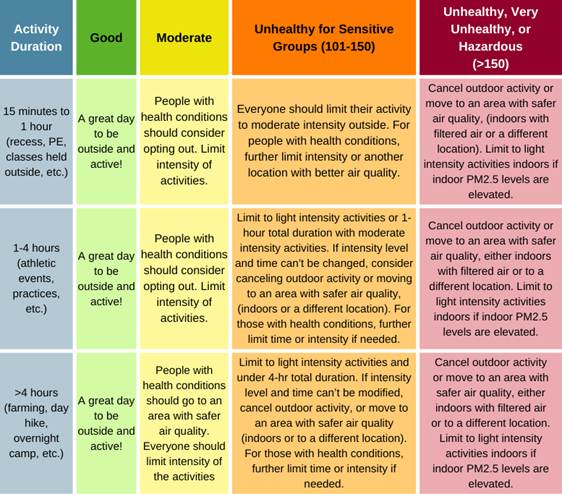
A quick guide to activity levels based on air quality:
- Green: A great day to be outside
- Yellow: A fine day to be outside
- Orange: Unhealthy for those who are sensitive, like children or older adults, or have lung or heart health challenges. Those who are not sensitive may still notice effects and should limit outdoor activity intensity
- Red – Dark Red/Purple: Cancel outdoor activities and limit any necessary outdoor activity to light intensity with frequent breaks. Consider spending the day inside with air filtration if possible.
